- Green Glow
- Posts
- 🌱 Why Clean Energy Deployment Is Outpacing Job Creation 📉👷
🌱 Why Clean Energy Deployment Is Outpacing Job Creation 📉👷
Clean energy capacity is expanding at record speed, but job creation is lagging behind. Learn why renewable deployment is outpacing employment and what it means for the energy transition.

Green Glow & Green Glow
January 15, 2026
The global energy transition is moving at unprecedented speed. Solar panels, wind farms, and battery storage projects are being deployed faster than at any point in history. Installed renewable capacity continues to break records year after year. Yet behind this success story lies a growing imbalance. Clean energy deployment is accelerating far faster than job creation, raising concerns about workforce readiness, economic inclusion, and the long-term resilience of the transition itself.
This disconnect highlights a structural challenge that governments, industry leaders, and policymakers can no longer ignore.
Table of Contents

The Rapid Acceleration of Clean Energy Deployment
Over the past decade, renewable energy technologies have benefited from sharp cost declines, policy support, and strong investor interest. Solar and wind in particular have moved from niche technologies to mainstream energy sources in many regions.
Utility-scale projects are now faster to permit and construct, supply chains are increasingly standardized, and capital is flowing into clean energy at scale. In many countries, adding renewable capacity has become cheaper and quicker than building new fossil fuel infrastructure.
This momentum has helped push global clean energy deployment to record levels. However, deployment efficiency has also reduced the number of workers needed per unit of capacity installed.
Job Growth Has Not Kept Pace
Despite rapid deployment, employment growth in the renewable sector has slowed. According to joint research by International Renewable Energy Agency and the International Labour Organization, global renewable energy employment increased only modestly in the most recent reporting period, even as capacity additions surged.
This trend does not indicate a decline in clean energy jobs, but rather a decoupling of capacity growth from employment growth. Each new gigawatt of renewable energy now requires fewer workers than in earlier phases of the transition.
Technology Efficiency Is Reducing Labor Intensity
One of the primary reasons for this gap is technological maturity.
Modern renewable systems are more efficient to manufacture, install, and maintain. Automation has expanded across solar panel manufacturing, wind turbine assembly, and grid management. Construction techniques have improved, and digital tools now handle tasks once performed manually.
While these gains lower costs and speed deployment, they also reduce labor intensity. As a result, clean energy can scale rapidly without generating proportional employment growth.
Manufacturing Concentration Limits Local Job Creation
Another major factor is the geographic concentration of clean energy manufacturing.
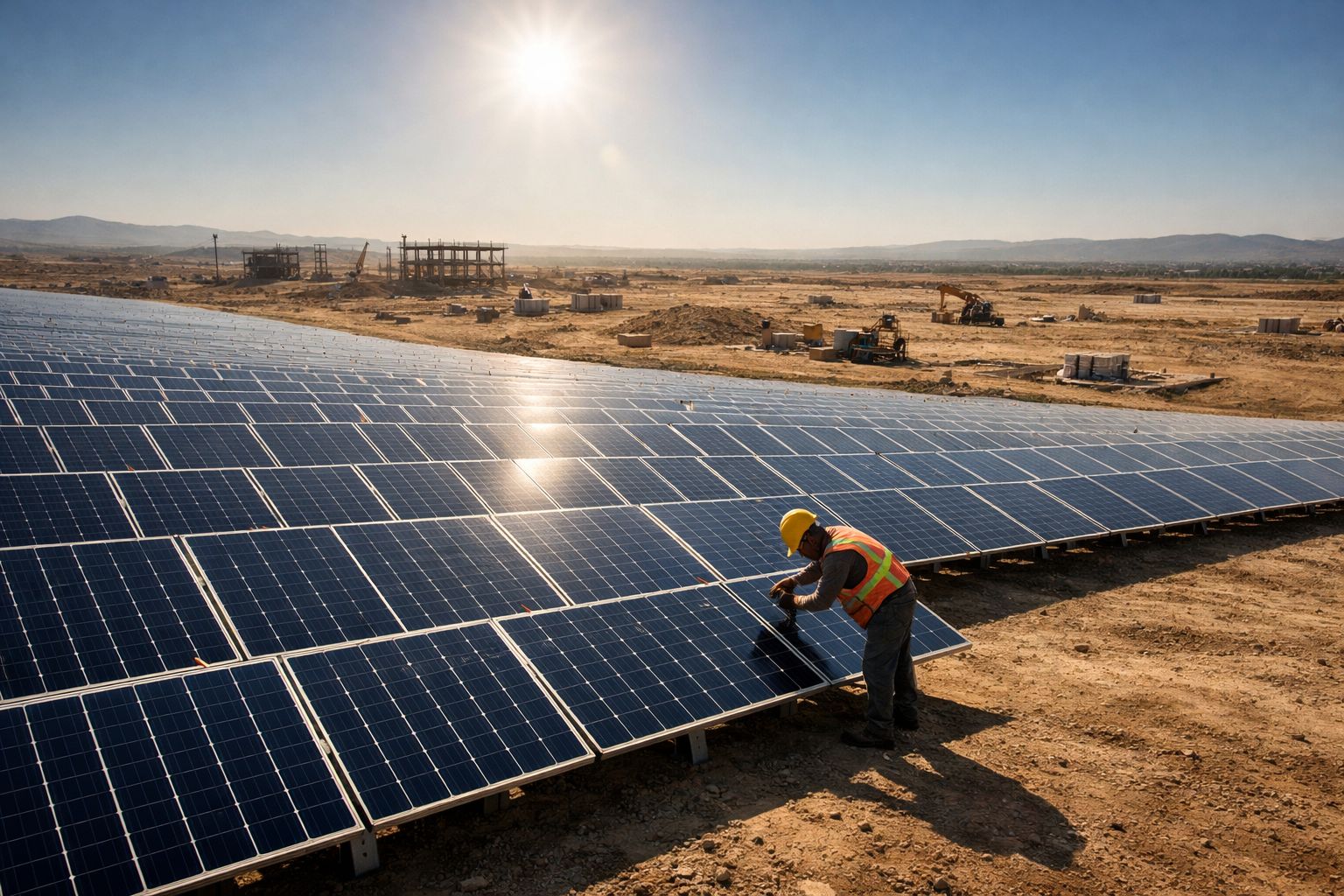
A large share of renewable equipment production is concentrated in a small number of countries with highly developed supply chains. Nations that import solar panels, turbines, and batteries capture the environmental benefits of clean energy deployment but miss out on many manufacturing jobs.
This imbalance is particularly visible in regions that focus primarily on installation and operation while relying on imports for core components. Without domestic industrial strategies, clean energy expansion does not automatically translate into broad employment gains.
Skills Gaps Are Slowing Workforce Expansion
The clean energy transition increasingly demands specialized skills. Electrical engineering, power electronics, grid integration, digital monitoring, and advanced manufacturing are now central to the sector.
Many labor markets lack sufficient trained workers in these areas. Education systems and vocational programs have not scaled quickly enough to meet industry demand. As a result, companies often face talent shortages even as overall employment growth remains subdued.
Without coordinated workforce planning, deployment can advance faster than the labor force required to support it.
Policy Focus Has Prioritized Capacity Over People
Most energy transition policies are designed to maximize deployment speed and emissions reduction. While these goals are critical, workforce considerations are often treated as secondary.
Incentives typically reward megawatts installed rather than jobs created. Procurement frameworks rarely include labor standards or local employment requirements. Training programs are often fragmented or underfunded.
This policy imbalance allows clean energy deployment to surge while job creation lags behind.
Why This Gap Matters
A clean energy transition that fails to generate sufficient employment risks losing public support. Communities that see new infrastructure but few local jobs may perceive the transition as economically exclusionary.
Employment is also essential for long-term system resilience. A shortage of skilled workers can slow maintenance, delay grid upgrades, and constrain future expansion. Without people, infrastructure alone cannot sustain the energy transition.
Bridging the gap between deployment and jobs is therefore not just a social issue. It is a strategic necessity.

Conclusion
Aligning clean energy deployment with job creation requires a shift in approach. Governments and industry must integrate workforce planning into energy policy, invest in skills development, and strengthen domestic supply chains where feasible.
The energy transition is not only a technological transformation. It is a human one. Ensuring that clean energy growth delivers meaningful employment will determine whether the transition is both sustainable and socially durable in the decades ahead.
FAQs
Why is clean energy deployment growing faster than job creation
Clean energy technologies have become more efficient, automated, and standardized. As a result, each new project requires fewer workers than in earlier stages of the energy transition, allowing capacity to scale faster than employment.
Does this mean clean energy is not creating jobs
No. Clean energy continues to employ millions of people globally. However, job growth is slowing relative to the pace of deployment, creating a gap between infrastructure expansion and workforce growth.
Which renewable sectors employ the most people
Solar photovoltaics employ the largest share of the renewable workforce, followed by bioenergy, hydropower, and wind energy. Manufacturing, installation, and operations all contribute, but manufacturing jobs are increasingly concentrated in a small number of countries.
Why are clean energy jobs concentrated in certain countries
Countries with integrated supply chains, industrial policy support, and advanced manufacturing capacity capture more clean energy jobs. Nations that rely on imported equipment benefit from deployment but generate fewer domestic jobs.
You May Also Like
🌱 Trump's New Executive Order Strikes at Renewable Energy Tax Credits 🏛️📉
🌱 Are Rising Tariffs Slowing Down the Clean Energy Revolution? ⚡💸
🌱 Airport Pollution Blamed for Lamb Loss: A Farmer's Devastating Story 😢🐑
🌱 How China’s Tourism Industry Is Embracing Renewable Energy to Go Green ✈️🌍
🌱 Extreme Heat is Coming for Our Kids—Will We Act in Time? 🔥⚠️
External Links
Follow Us:
X: https://www.x.com/greenglownews
Youtube: https://www.youtube.com/@greenglownews
Instagram: https://www.instagram.com/greenglownews
Sponsored Links