- Green Glow
- Posts
- 🌱 Scientists Say 2025 Is One of the Three Hottest Years in Global History 🌍🔥
🌱 Scientists Say 2025 Is One of the Three Hottest Years in Global History 🌍🔥
Scientists confirm 2025 is one of the three hottest years ever recorded, highlighting accelerating global warming, rising climate risks, and growing impacts worldwide.

Green Glow
December 30, 2025
Scientists have confirmed that 2025 ranks among the three hottest years ever recorded, reinforcing a long-term pattern of accelerating global warming. The finding adds to mounting evidence that Earth’s climate system is undergoing profound and persistent change driven largely by human activity.
Global temperature records compiled by climate research agencies show that recent years are consistently surpassing historical heat benchmarks. The inclusion of 2025 among the hottest years ever measured highlights how extreme warmth is no longer an anomaly but an emerging norm.
Table of Contents
How Scientists Measure Global Temperatures
Global temperature rankings are based on data collected from thousands of land stations, ocean buoys, ships, and satellites. Scientists analyze surface air temperatures over land and sea surface temperatures across the world’s oceans to calculate annual global averages.
These measurements are compared against a pre-industrial baseline from the mid-1800s, allowing researchers to assess how much the planet has warmed since large-scale fossil fuel use began. Multiple independent datasets consistently place 2025 among the top three warmest years, strengthening confidence in the conclusion.
Why 2025 Reached Record Heat Levels
Researchers attribute the extreme warmth of 2025 primarily to the continued buildup of greenhouse gases in the atmosphere. Carbon dioxide, methane, and other heat-trapping gases prevent excess heat from escaping into space, causing long-term warming.
Natural climate patterns also played a role, but scientists emphasize that these factors alone cannot explain the scale or persistence of recent heat. Even during periods when natural cooling influences were expected, global temperatures remained unusually high, underscoring the dominant influence of human-caused climate change.
Exceeding Key Climate Thresholds
One of the most significant findings linked to 2025 is that recent multi-year average global temperatures have crossed the 1.5 degree Celsius threshold above pre-industrial levels. This benchmark is widely used by scientists to assess climate risk.
While a single year above this level does not mean the target has been permanently breached, the trend signals increasing difficulty in limiting warming without rapid emissions reductions. Scientists warn that prolonged exceedance raises the likelihood of irreversible impacts on ecosystems and human systems.

Growing Impacts Around the World
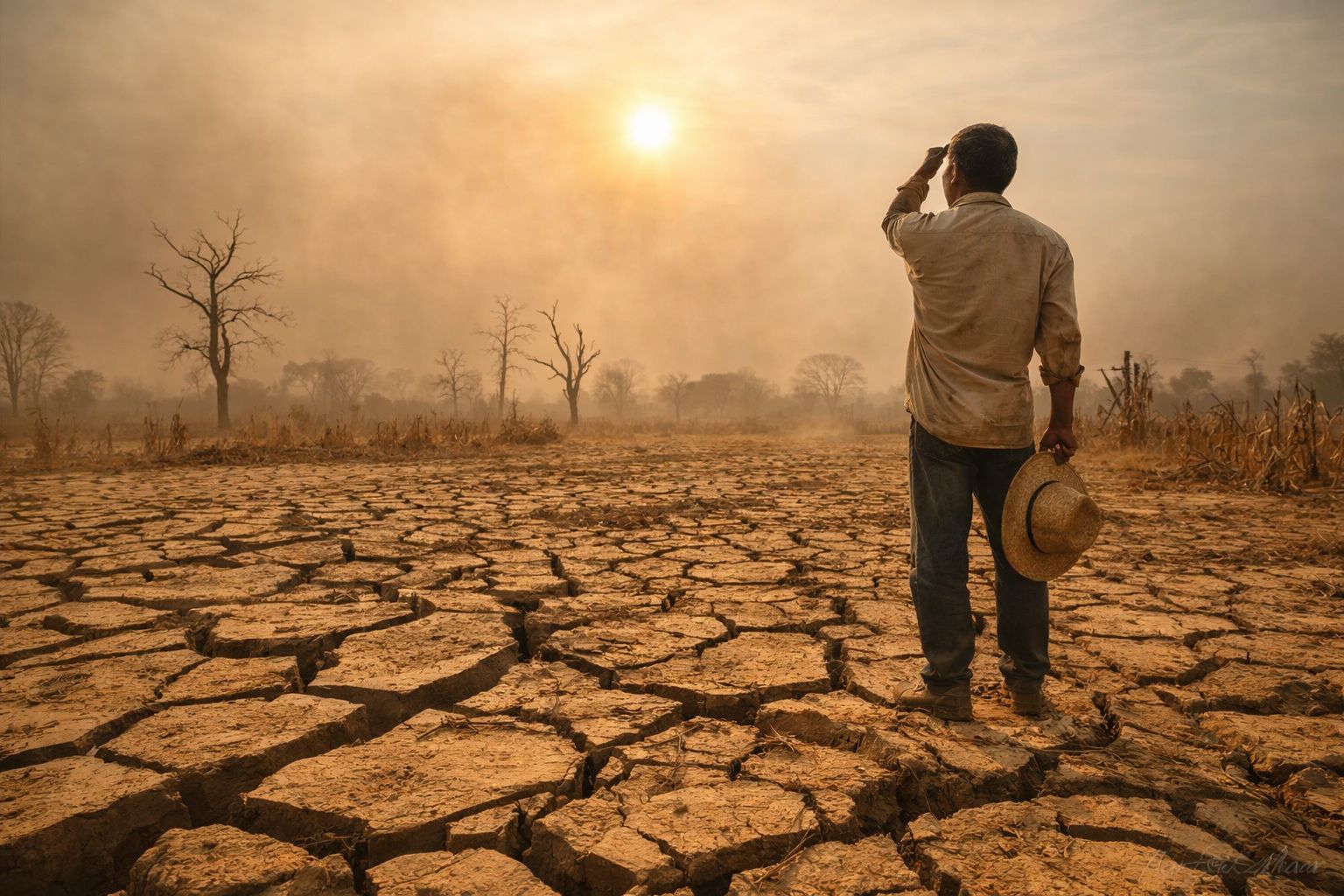
The extreme heat of 2025 coincided with widespread climate-related impacts across multiple regions. Prolonged heatwaves strained public health systems, particularly in urban areas where high temperatures were intensified by dense infrastructure.
Drought conditions affected agriculture and water supplies in several regions, while warmer oceans contributed to more intense storms and flooding events. Scientists note that such impacts are becoming more frequent and severe as global temperatures continue to rise.
Why Recent Years Are Breaking Records So Frequently
Climate experts stress that the clustering of record-breaking years is not coincidental. Each decade since the 1980s has been warmer than the one before it, and the last ten years collectively represent the hottest decade on record.
As greenhouse gas concentrations increase, the baseline temperature of the planet rises, making new records easier to break. This means future years are increasingly likely to rank among the hottest unless emissions are significantly reduced.
What Scientists Say Comes Next
Looking ahead, researchers warn that global temperatures will continue to climb unless swift and sustained action is taken to cut greenhouse gas emissions. Transitioning away from fossil fuels, improving energy efficiency, and expanding clean energy deployment are identified as critical steps.
Scientists also emphasize the importance of adaptation measures, including heat-resilient infrastructure, improved early warning systems, and better protection for vulnerable communities.
Conclusion
The ranking of 2025 as one of the three hottest years in global history sends a clear signal about the state of the planet. Climate change is no longer a distant or theoretical concern but a present-day reality with measurable consequences.
As scientists continue to refine climate models and observations, the message remains consistent. Without decisive global action, record-breaking heat is likely to define not just individual years but the decades ahead.
FAQs
Why is 2025 considered one of the hottest years on record?
Scientists analyzed global temperature data from land stations, oceans, and satellites and found that 2025 ranks among the three warmest years since modern record-keeping began in the 1800s. Multiple independent datasets confirm this ranking.
What caused the extreme global heat in 2025?
The primary cause was the continued buildup of greenhouse gases from human activities such as burning fossil fuels. Natural climate patterns played a minor role, but scientists agree they cannot explain the sustained level of warming seen in 2025.
Did global temperatures exceed the 1.5 degree Celsius threshold in 2025?
Multi-year average global temperatures exceeded the 1.5 degree Celsius level above pre-industrial times. While a single year above this threshold does not mean it has been permanently crossed, it signals increasing climate risk.
How do scientists measure global temperature trends?
Scientists combine data from weather stations, ocean buoys, ships, and satellites to calculate global average temperatures. These figures are compared to pre-industrial baselines to track long-term warming trends.
What were the impacts of 2025’s extreme heat?
The heat contributed to severe heatwaves, droughts, agricultural stress, stronger storms, and increased risks to human health and ecosystems across many regions of the world.
You May Also Like
External Links
Follow Us:
X: https://www.x.com/greenglownews
Youtube: https://www.youtube.com/@greenglownews
Instagram: https://www.instagram.com/greenglownews
Sponsored Links