- Green Glow
- Posts
- 🌱 How Zimbabwean Schoolchildren Turn Waste Into Light and Hope 💡♻️
🌱 How Zimbabwean Schoolchildren Turn Waste Into Light and Hope 💡♻️
Discover how schoolchildren in rural Zimbabwe are transforming plastic waste into solar powered lanterns that bring light, learning, and hope to their homes. Learn how this sustainable student led innovation is improving education and empowering communities.

Green Glow
December 07, 2025
Access to electricity remains one of the most significant barriers to education in rural Zimbabwe. Many families still live without reliable power, which makes something as simple as completing homework after sunset a daily struggle. At Manyoshwa Primary School in Seke, Mashonaland East Province, a remarkable student-driven initiative is turning that challenge into an opportunity. Using discarded plastic bottles, tins, LED lights, and batteries, schoolchildren are transforming waste into solar powered lanterns that bring light and hope into their homes.
Table of Contents

A Simple Idea That Solves a Big Problem
In rural areas where electrification is limited, nights are often dark and unproductive. Children who spend long hours fetching water, helping with household chores, or working in family fields cannot study until daylight returns. This affects academic performance and contributes to long term inequalities. The community needed a solution that was affordable, renewable, and locally adaptable.
Teachers and local innovators introduced the Chigubhu lantern. It is a homemade device built from recycled waste materials and powered by solar charging at school. Despite its simple construction, the lantern provides up to four hours of usable light every night. For children who previously relied on candles, fires, or nothing at all, this is a transformative change.
How Children Build Their Solar Lanterns
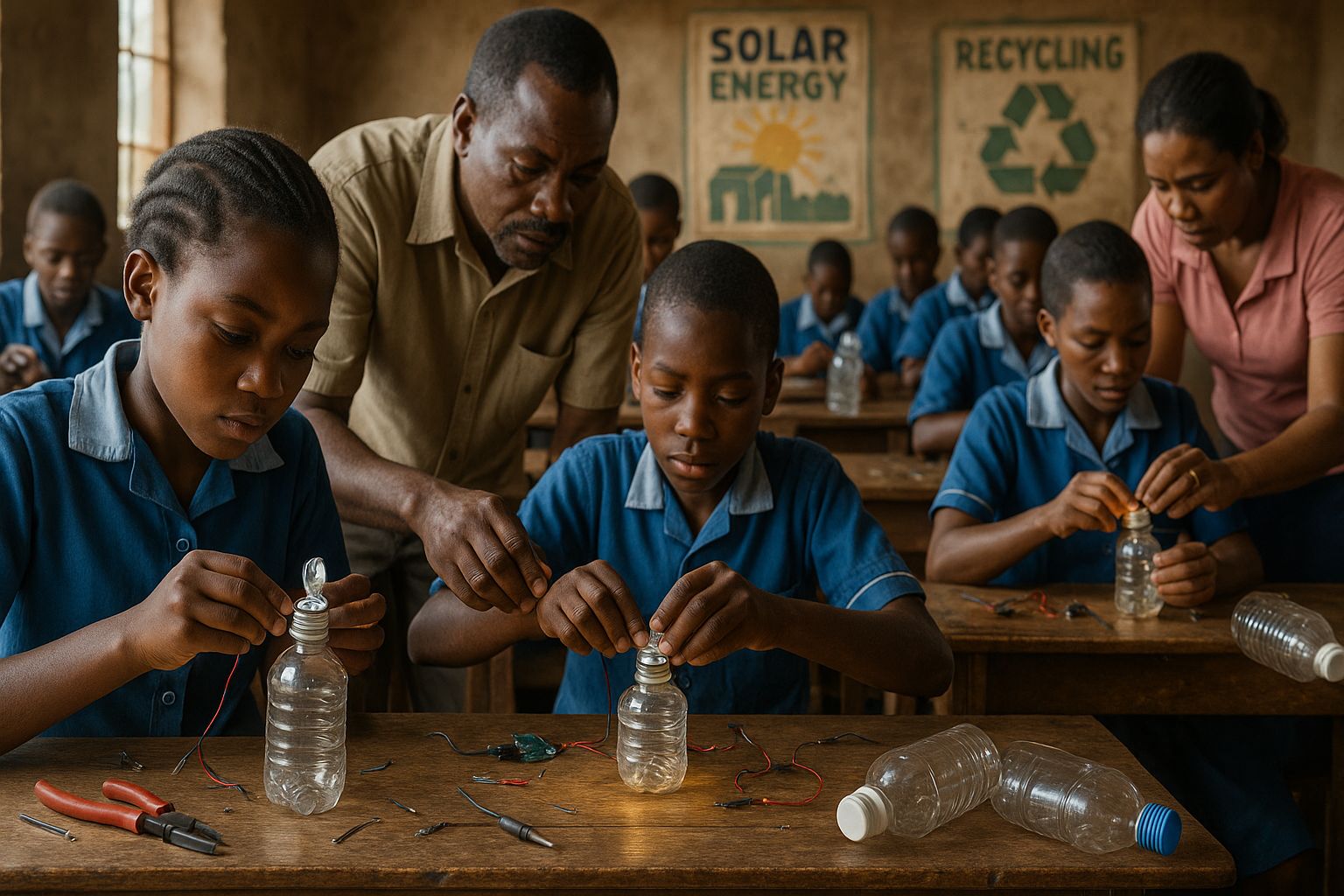
The process begins with collecting discarded bottles, tins, and electronic waste from the community. These items form the body of the lantern. Salvaged LED lights and rechargeable batteries become the lighting source. Everything is assembled at school under the guidance of teachers who have been trained in basic electronics and solar energy.
The school’s solar charging station powers the lanterns during the day. Students take their lanterns home in the afternoon and return with them the next morning for recharging. More than one hundred learners at Manyoshwa Primary School now use lanterns they built themselves. They not only gain access to light but also learn valuable practical skills such as wiring, maintenance, and resourceful problem solving.
A Circular Economy in Action
Zimbabwe generates significant amounts of plastic and electronic waste every year. Most of it ends up in dumpsites, rivers, and open spaces. The lantern project turns this challenge into a teaching opportunity. Students are taught how to collect and repurpose waste materials, which creates awareness about pollution and the importance of recycling.
The initiative also reduces reliance on firewood and candles, both of which have environmental and safety risks. Solar lanterns provide a renewable source of light that does not harm the environment or drain household budgets. It is a small but meaningful step towards a sustainable future.
Lighting Homes and Inspiring Minds
For many schoolchildren, the lantern means more than just illumination. It symbolizes independence, pride, and hope. Students now have extra hours each evening to read, revise, and dream. Parents report noticeable improvements in their children's performance and motivation.
Teachers have also observed a rise in confidence among learners who build their own lanterns. Creating something useful with their own hands gives them a sense of ownership and achievement. Some students have even expressed interest in pursuing careers in engineering, renewable energy, or environmental science.
Scaling a Homegrown Solution
More than one thousand five hundred lanterns have already been produced and distributed across Zimbabwe. Hundreds of students in various districts have been trained in lamp building. As the initiative grows, educators hope to standardize components, create a universal charging port, and expand access to training in other regions.
However, scaling up will require continued support. Access to basic tools, rechargeable batteries, and small electronic components is still limited in many rural areas. Collaboration between schools, local organizations, and government agencies would help sustain and expand the program.
A Model for Community Powered Innovation
The Chigubhu lantern project shows that powerful solutions do not always come from large institutions or expensive interventions. Sometimes the most impactful ideas come from students who refuse to let darkness limit their potential. By combining recycling, renewable energy, and practical education, Zimbabwean schoolchildren are rewriting what is possible.
Their lanterns are more than lights. They are symbols of resilience. They are proof that even in communities with limited resources, creativity and determination can spark real change. Each lantern illuminates not only homes but also a brighter path for the next generation.

Conclusion
The story of Zimbabwean schoolchildren turning waste into solar powered lanterns is a powerful reminder that innovation often begins with necessity. In communities where electricity is limited and educational opportunities are challenged by darkness, these young learners are building their own solutions with what they have. Their Chigubhu lanterns are more than recycled bottles and LED lights. They represent resilience, determination, and the belief that change can start with a single idea.
By combining renewable energy, environmental awareness, and hands on learning, the project strengthens both education and sustainability. As more schools adopt this model, the impact has the potential to spread across rural Zimbabwe and beyond. Every lantern built is a step toward a brighter future, one that is powered by creativity and hope.
FAQs
What is a Chigubhu lantern?
A Chigubhu lantern is a student made solar lantern created from recycled materials such as plastic bottles, tins, LED lights, and rechargeable batteries. It provides up to four hours of light each night after being charged at school.
Why are these lanterns important for rural communities?
Many rural homes in Zimbabwe lack reliable electricity. The lanterns allow children to study after sunset, improve academic performance, and reduce the need for unsafe lighting sources like candles or open flames.
How are the lanterns powered?
The lanterns are charged using solar energy at school during the day. Students take them home in the afternoon and bring them back for recharging the next morning.
What skills do students learn while making the lanterns?
Children gain hands on experience in basic electronics, wiring, recycling, and problem solving. These skills can inspire interest in science, engineering, and renewable energy careers.
How many students have benefited from the program?
More than one hundred students at Manyoshwa Primary School use lanterns they made themselves, and over one thousand five hundred lanterns have been distributed across different parts of Zimbabwe.
You May Also Like
External Links
Follow Us:
X: https://www.x.com/greenglownews
Youtube: https://www.youtube.com/@greenglownews
Instagram: https://www.instagram.com/greenglownews
Sponsored Links